
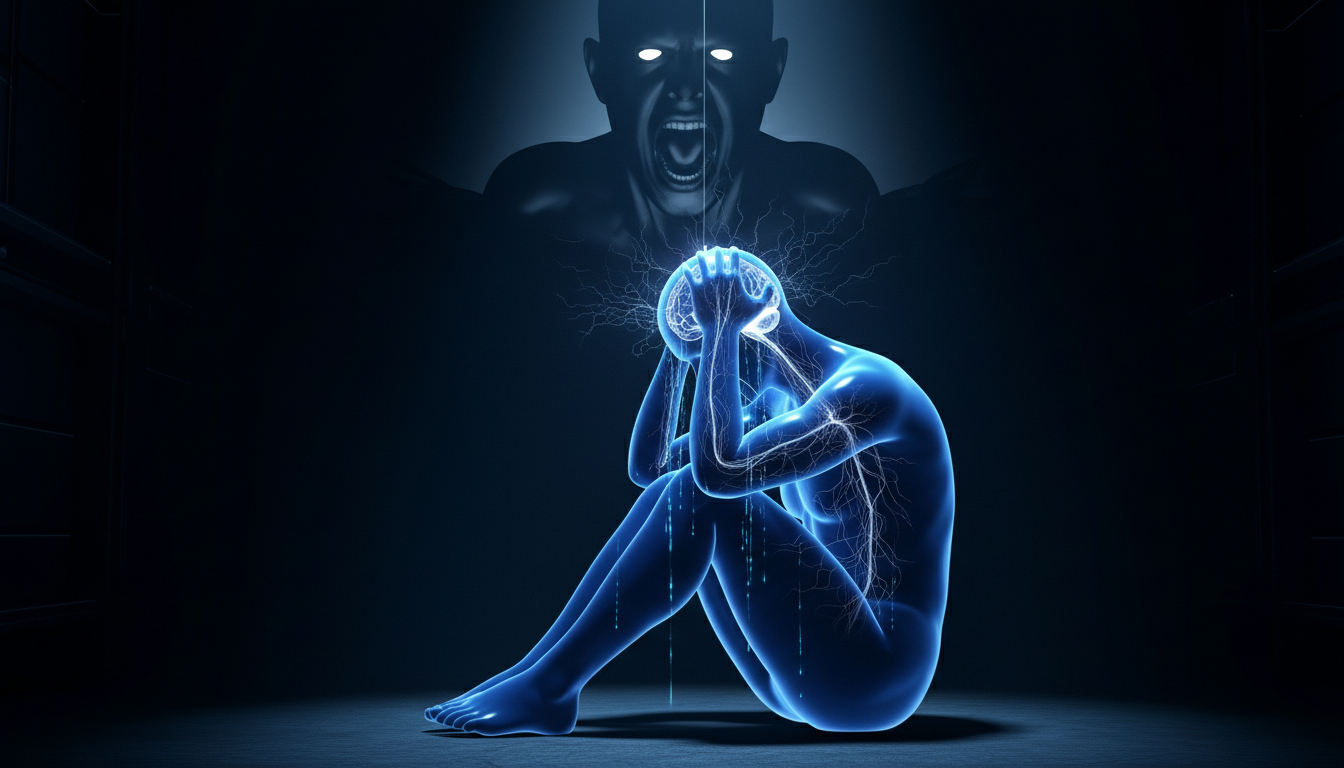
Psychology Truth Crying when someone raises their voice is not weakness but psychological conditioning. Learn trauma triggers, nervous system responses, and how to heal emotional conditioning.
In a world that constantly tells people to “toughen up,” crying is often misunderstood as weakness. When someone raises their voice and you freeze, tremble, or cry, society may label you as overly sensitive, fragile, or emotionally weak. But psychology tells a very different story.
You are not weak. You are conditioned.
Your reaction is not a flaw in your character—it is a learned survival response shaped by your past experiences, environment, and nervous system. Understanding this concept can change how you see yourself, your trauma, and your healing journey.

Understanding Emotional Conditioning
Emotional conditioning is the process by which the brain learns to associate certain stimuli with emotional responses. This learning often happens unconsciously, especially during childhood.
If you grew up in an environment where loud voices meant danger, punishment, humiliation, or abandonment, your brain learned to associate raised voices with threat. Over time, your nervous system automatically reacts to loud or aggressive tones, even if the present situation is not truly dangerous.
This is not weakness.
This is your brain trying to protect you.
The Science Behind Crying When Someone Raises Their Voice
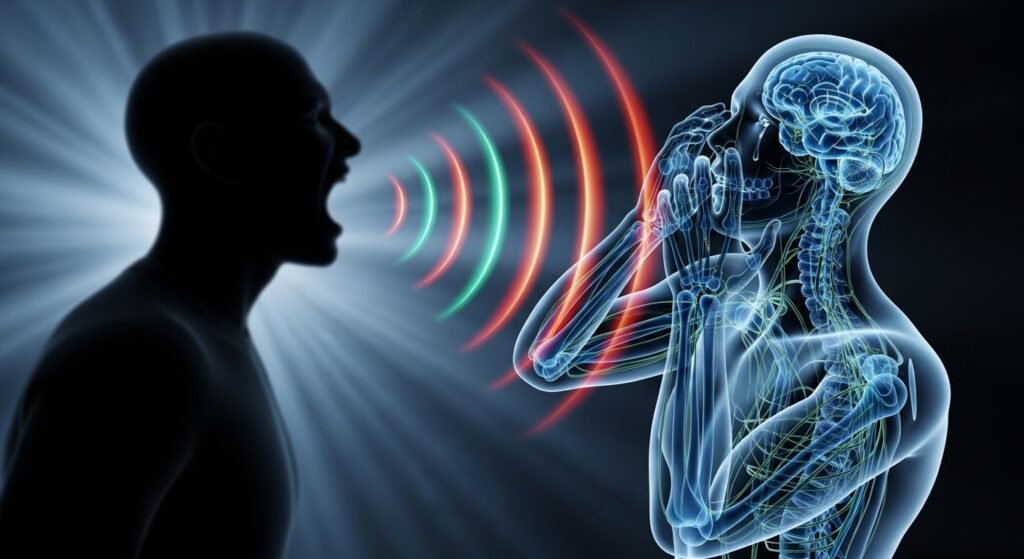
When someone raises their voice, your brain’s amygdala—the fear and threat detection center—activates instantly. It sends signals to your body that you are in danger. This triggers the fight, flight, freeze, or fawn response.
-
Fight: You argue or defend yourself.
-
Flight: You want to leave or escape.
-
Freeze: You shut down and feel paralyzed.
-
Fawn: You try to please the person to avoid conflict.
Crying is often part of the freeze or fawn response. It happens because your body is overwhelmed and trying to release emotional tension.
Your tears are not weakness—they are your nervous system’s language.

Click The Link Below for More Quotes.
Read Also About DARK MOTIVATION QUOTES
Why Some People React Strongly to Raised Voices
Not everyone reacts the same way to loud voices. Some people can argue back confidently, while others break down instantly. The difference lies in conditioning and past experiences.
You might be conditioned if:
-
You grew up with yelling, emotional abuse, or unpredictable caregivers
-
You were punished for expressing emotions
-
You learned that speaking up leads to conflict or danger
-
You experienced trauma, bullying, or toxic relationships
-
You felt powerless in childhood
Your brain learned one rule:
Raised voice = threat.
So when it happens again, your body reacts before your mind can think.
Trauma and the Raised Voice Trigger
Trauma is not only physical abuse or major disasters. Trauma can be emotional, psychological, and repetitive. Being yelled at repeatedly, feeling unsafe, or walking on eggshells can deeply shape your nervous system.
A raised voice can act as a trauma trigger. It can take you back to moments when you felt small, scared, or powerless. Even if you logically know you are safe, your body reacts as if you are not.
This is why trauma survivors often cry, dissociate, or shut down during conflict.
The Myth of Emotional Weakness
Society often glorifies emotional numbness as strength. People who never cry or show vulnerability are seen as strong. But emotional suppression is not strength—it is often a survival mechanism.
Crying is a natural human response. It releases stress hormones and helps regulate emotions. In psychology, emotional expression is considered a sign of emotional intelligence, not weakness.
True weakness is ignoring emotions, denying trauma, and refusing to heal.

Conditioning vs. Personality
Many people believe, “This is just my personality. I’m too sensitive.” But sensitivity is often shaped by environment.
Conditioning means your brain adapted to survive your surroundings. If you had to be hyper-aware of tone changes, moods, or anger, your brain became sensitive by necessity.
Your sensitivity was once your survival tool.

How Conditioning Shapes Adult Relationships
Conditioning doesn’t disappear when you grow up. It follows you into relationships, friendships, workplaces, and everyday interactions.
You might:
-
Avoid conflict at all costs
-
Cry during arguments
-
Feel intense anxiety when someone is angry
-
Apologize even when you’re not wrong
-
Shut down emotionally when confronted
This can lead to toxic patterns where others take advantage of your fear of conflict.
Understanding that this is conditioning—not weakness—is the first step to breaking these patterns.
Reprogramming Your Nervous System
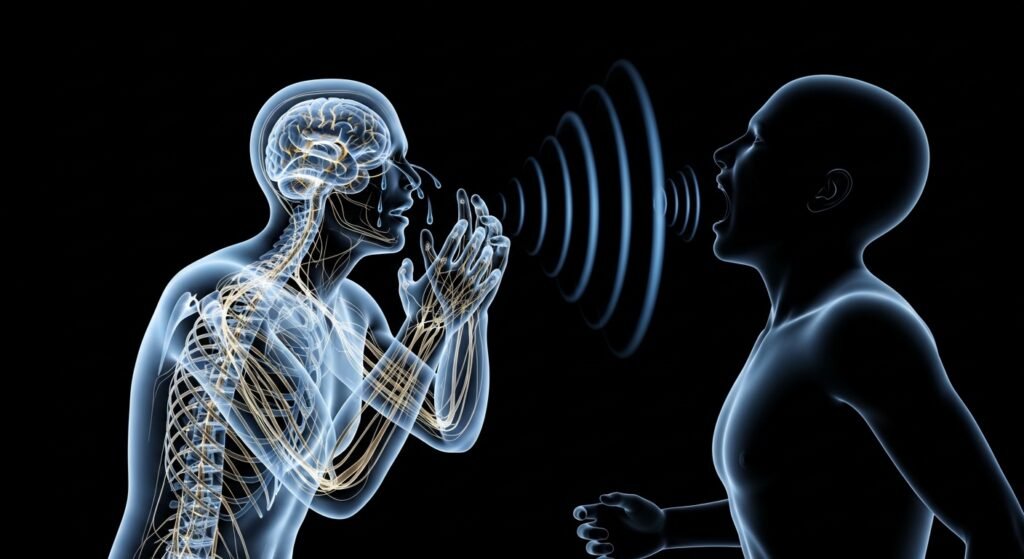
The good news is: conditioning can be changed. Your brain is plastic, meaning it can rewire itself. Healing is possible.
Here are some psychological methods to recondition your response:
1. Awareness
Notice your triggers. When someone raises their voice, observe your body’s reaction without judging yourself. Awareness is the first step to change.
2. Grounding Techniques
Practice deep breathing, cold water on your wrists, or focusing on your senses. This helps your nervous system calm down.
3. Self-Talk
Remind yourself:
“I am safe. This is not the past. I am in control.”
4. Therapy
Trauma therapy, CBT, and somatic therapies help reprogram conditioned responses. Therapy is not for weak people—it is for brave people.
5. Exposure in Safe Environments
Gradually practice expressing yourself in safe situations. Your brain learns that raised voices don’t always mean danger.
The Power of Self-Compassion
Most conditioned people are harsh on themselves. They think, “Why am I like this?” or “I’m so weak.” But self-blame only reinforces the trauma.
Self-compassion is powerful healing. Talk to yourself like you would talk to a child who is scared. Your reactions are valid. Your emotions are real.
You didn’t choose your conditioning.
But you can choose your healing.
Breaking the Cycle
When you understand conditioning, you stop blaming yourself and start breaking generational cycles. If you heal, you won’t pass the same emotional patterns to your children or relationships.
You become the person who raises their voice less, listens more, and creates emotional safety.
That is real strength.
Crying as a Strength
Crying is not weakness. It is emotional processing. It is your body releasing stored stress. It is a signal that something matters.
Strong people cry.
Healed people cry and still stand up for themselves.
Final Thoughts
“If you cry and someone raises their voice at you, you are not weak—you are conditioned.”
This quote is not an excuse to stay stuck. It is an explanation, a revelation, and a starting point for healing.
Your reactions were shaped by experiences you didn’t choose. But your healing is in your hands. You can learn to feel safe, speak up, and stay calm during conflict.
You are not broken.
You are not weak.
You are a survivor learning to become free.